The North Carolina General Assembly passed new legislation to correct on-going confusion related to the right-of-way boundaries of state roads. The issue is due to missing documentation from the time certain state roads were constructed.
In North Carolina, the government started building roads in 1715 and formally created NCDOT (then called the State Highway Commission) in 1915. The system has grown to the second largest road network in the country. The expansion of roads in the state fueled commerce and prosperity which enhanced the value of land with direct access to these new roads. Property owners across the state gladly contributed or sold small portions of their land so the state could build a new road. The only problem is that too often the agreements were never formally recorded.
In most states, and for some land in North Carolina, the deeds for land show parcel boundaries at the edge of the public road right-of-way. However, it is also very common in our state for landowners’ deeds to still show the property extending to the centerline of the state road because the public right-of-way was never recorded. The property owner doesn’t maintain the road, and in fact, the state maintains areas beyond the road limits. There was most certainly an agreement to allow the state to build the road, since there is an existing physical road, but the deed to document it was never recorded.
This uniquely North Carolina situation has created confusion as the state continues to improve its road system, or as development activity has been required to add safety or traffic mitigation improvements to these roads. Too often, construction projects were erroneously and inconsistently required to secure easements or new right-of-way even though  the activity was within the limits that NCDOT maintains. SB-391, which included provisions to codify the Right-of-way limits, passed the House & Senate, and was signed by the governor, takes effect July 1, 2025.
The law clarifies that the official right-of-way shall match the limits of NCDOT maintenance, which uses physical elements as markers, including the back of drainage ditches, location of existing utilities, and other existing physical markers, or the areas currently “maintained” even when this is not on property records.
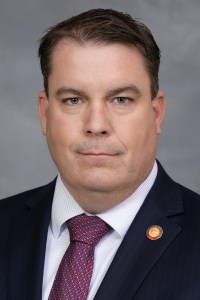
Carolina Strong was a primary advocate for passage of this legislation, which was two years in the making. A big thanks to Rep. Brenden Jones, who introduced the initial bill in 2023, and to Sen. Vickie Sawyer, who ran with the ball in 2025 by adding the language to one of her transportation bills. We appreciate their efforts in making this happen. Because of them, projects all across the state will be constructed more quickly and cost effectively.